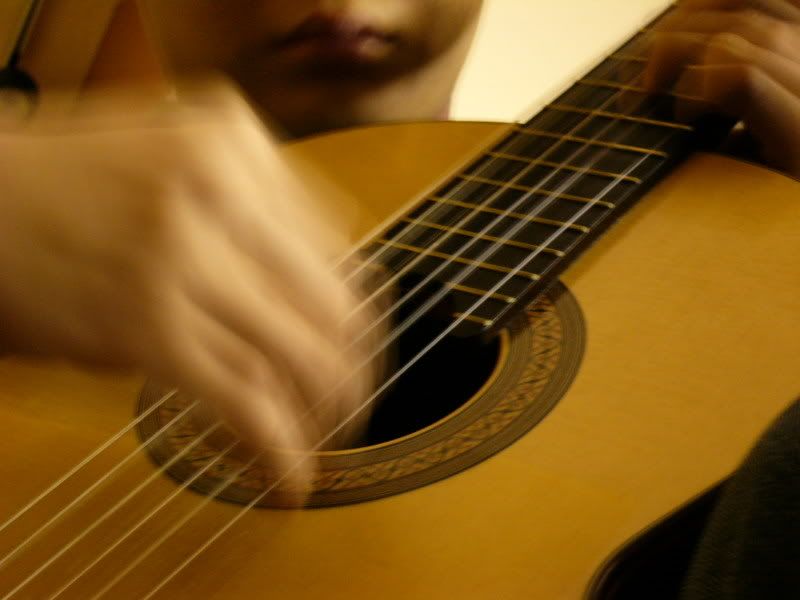
I've come to realise that the ego is the greatest obstacle to music-making.
At the most practical level, the existence of ego translates to stage-fright: when I realise that I'm going to be playing in front of an audience, there is the egoistic fear of making mistakes in front other people, or not playing at my best and causing people to think badly of me. Because of this, I start to focus too much on getting the right notes rather than on the overall musical and emotional content of the piece. The funny thing is that this often backfires: the more I think about what are the notes I have to play, the more likely I am to suffer a memory lapse. Even if no mistakes occur, the resulting performance would be mechanical and lifeless.
My best music is always produced when I'm playing on my own, without any feelings of self-consciousness or nervousness. Somehow, this just frees me to play the best music I ever make.
I love playing music for other people, but somehow this I get the feeling that my audience will never enjoy my music as much as I enjoy my own playing when I'm alone.
Saturday, April 15, 2006

Wednesday, April 12, 2006
I've just about managed to get settled down into the schedule of cramming for my finals, which begin on the 28th of April and will be over by the 17th of May.
I had drawn up a comprehensive schedule for my revision before I visited the US a fortnight ago, but it was only several days after my return that I managed to shake off my jetlag and excitement (from the visit and the prospect of studying in Princeton) to hit the books. In previous years, I have hit the books the moment Easter Break started, so this time I'm about 10 days behind compared with back then.
There also the psychological effect of being aware that the results of this exam wouldn't be crucial to my future, since I already have the place at Princeton; however I should make sure that I finish top in my class (which is a rather important bit in anyone's CV), but on the other hand I don't have to push as hard as in years gone by.
Conversely, a couple of the courses I'm taking this year have turned out to be very interesting and fascinating (see one of my past posts on my other blog), so I want to make sure I understand the subtleties of these subjects if for no other reason than my own curiosity.
Perhaps these two effects will cancel out and I'll end up doing not very differently from my earlier years.
I had drawn up a comprehensive schedule for my revision before I visited the US a fortnight ago, but it was only several days after my return that I managed to shake off my jetlag and excitement (from the visit and the prospect of studying in Princeton) to hit the books. In previous years, I have hit the books the moment Easter Break started, so this time I'm about 10 days behind compared with back then.
There also the psychological effect of being aware that the results of this exam wouldn't be crucial to my future, since I already have the place at Princeton; however I should make sure that I finish top in my class (which is a rather important bit in anyone's CV), but on the other hand I don't have to push as hard as in years gone by.
Conversely, a couple of the courses I'm taking this year have turned out to be very interesting and fascinating (see one of my past posts on my other blog), so I want to make sure I understand the subtleties of these subjects if for no other reason than my own curiosity.
Perhaps these two effects will cancel out and I'll end up doing not very differently from my earlier years.
Saturday, April 08, 2006
OK...the pics from my campus-scouting trip:
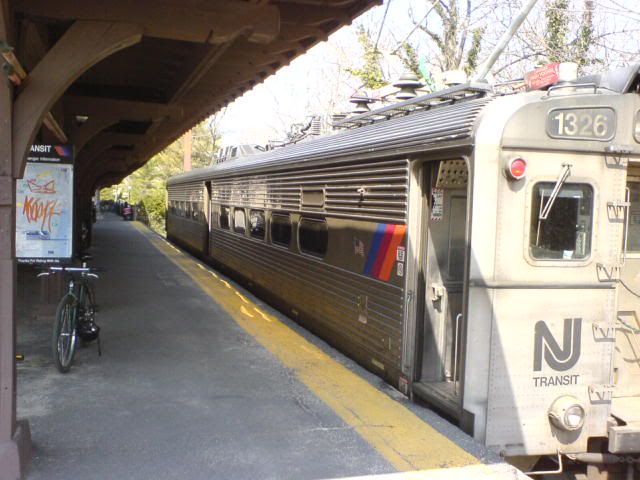
The single-carriage 'Dinky' train from Princeton Junction to the Princeton campus:
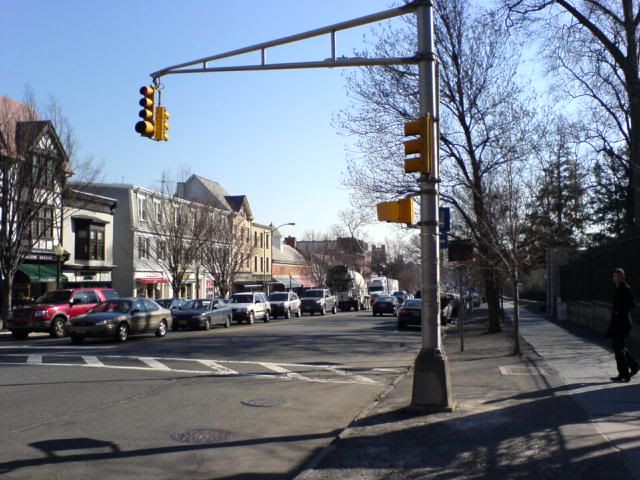
A couple of shots of 'downtown' Princeton.
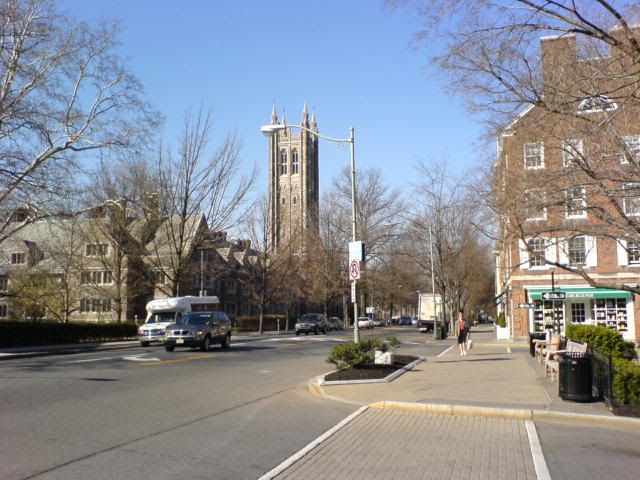
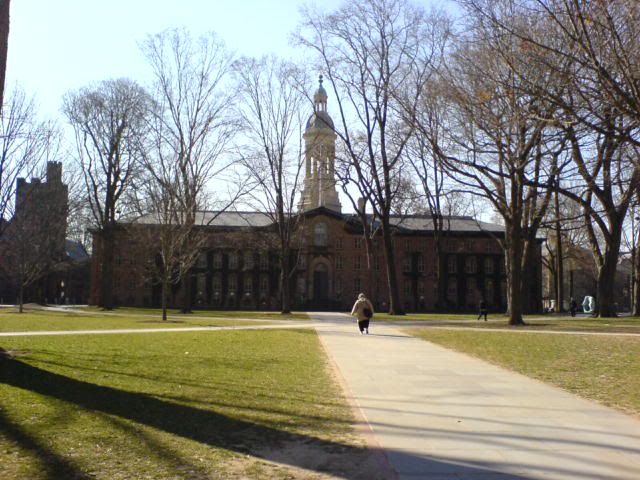
The Nassau Hall, oldest building in Princeton (and one-time capital of the US!).
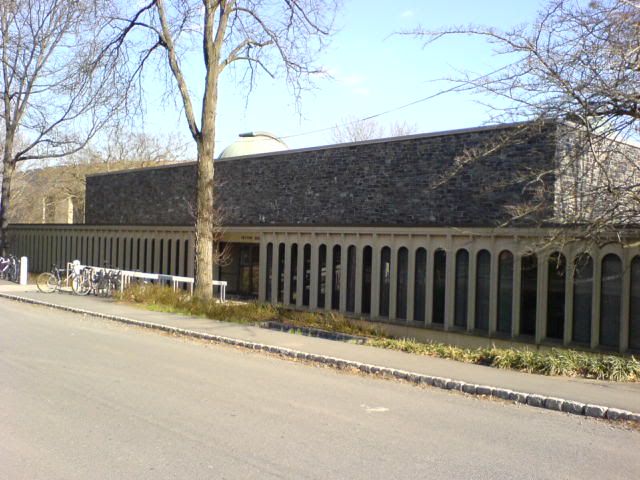
Peyton Hall, the astrophysics department building.
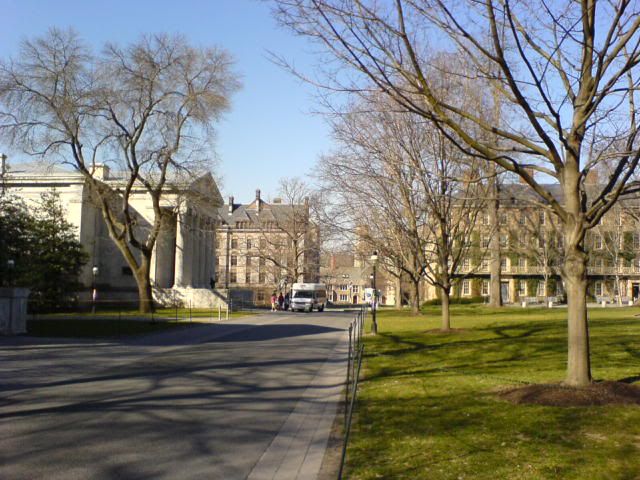
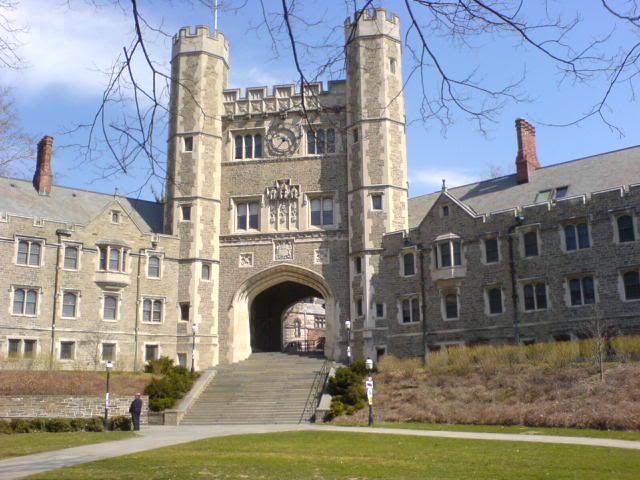
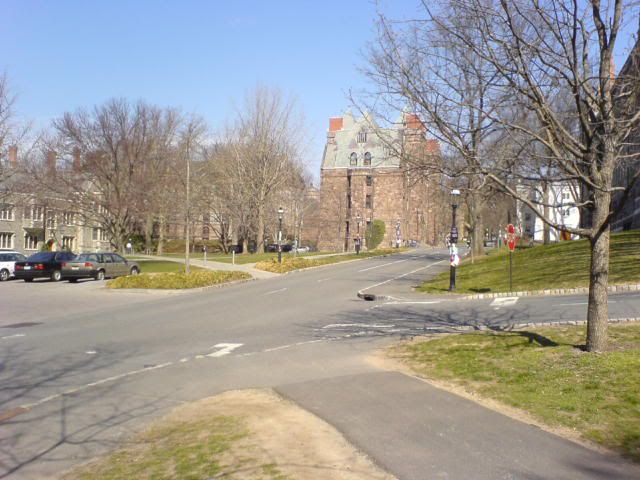
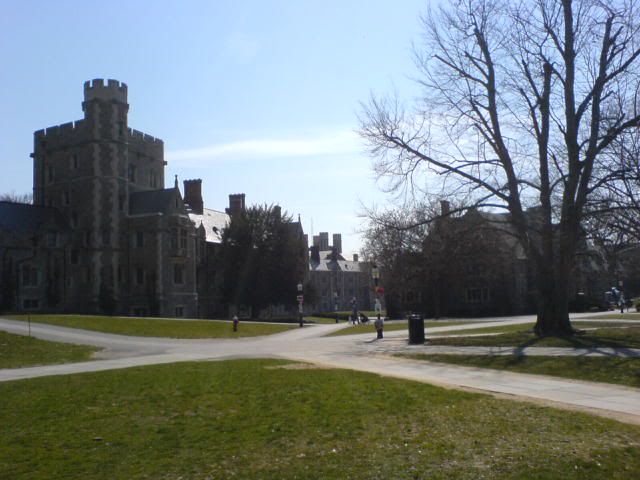
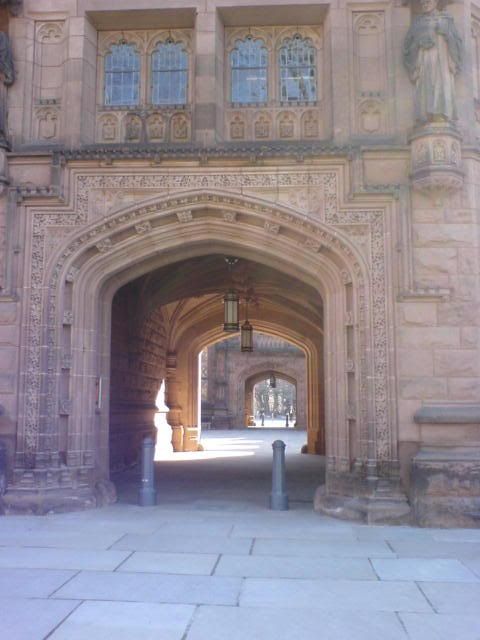
Some random shots of the Princeton campus:
And now Harvard:
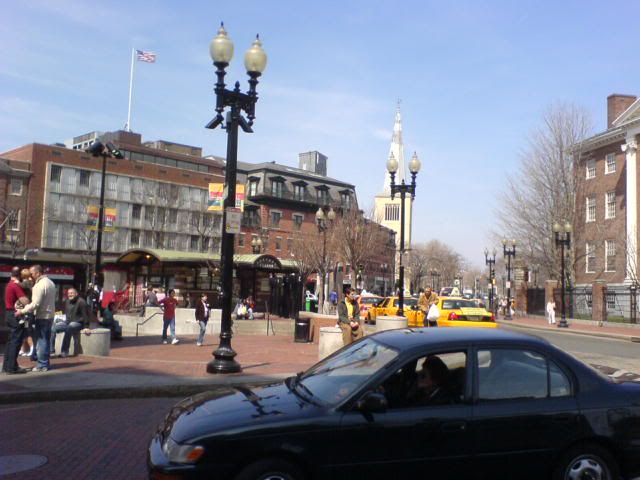
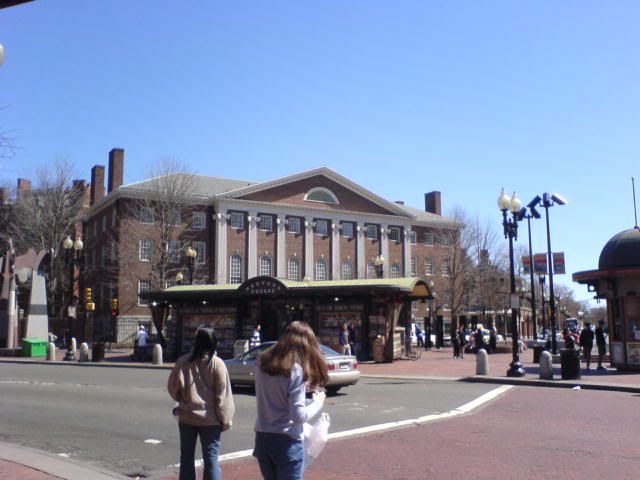
Harvard Square:
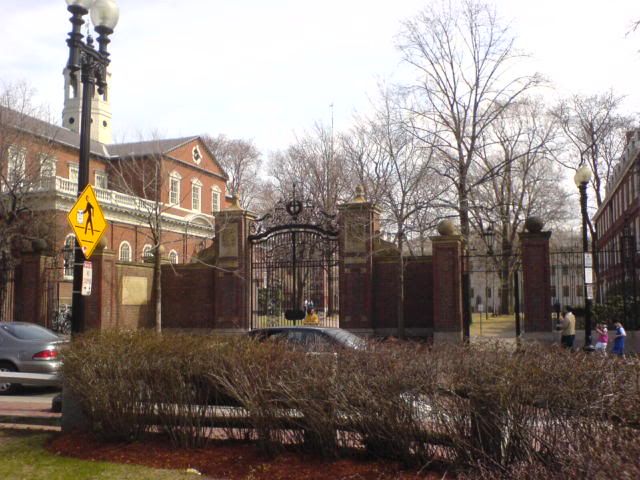
The entrance to the promised land: gate to the main Harvard campus...
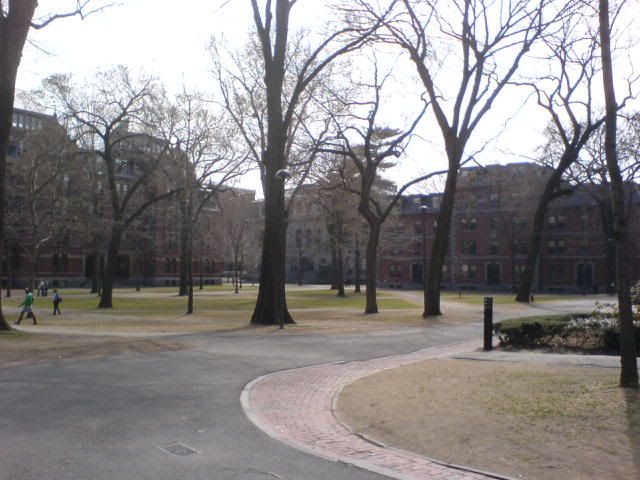
A couple of shots of Harvard Yard
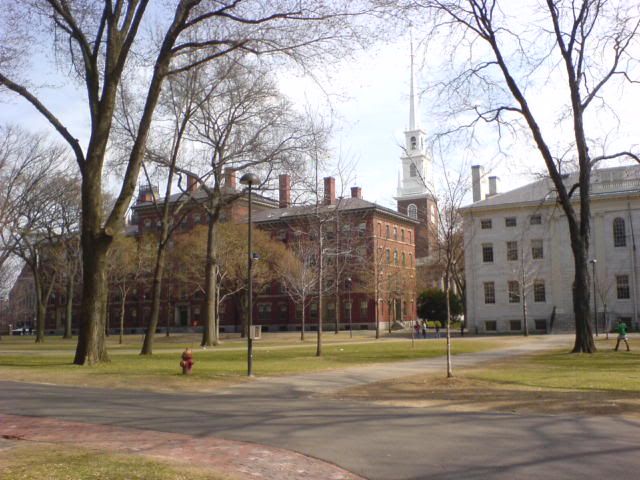
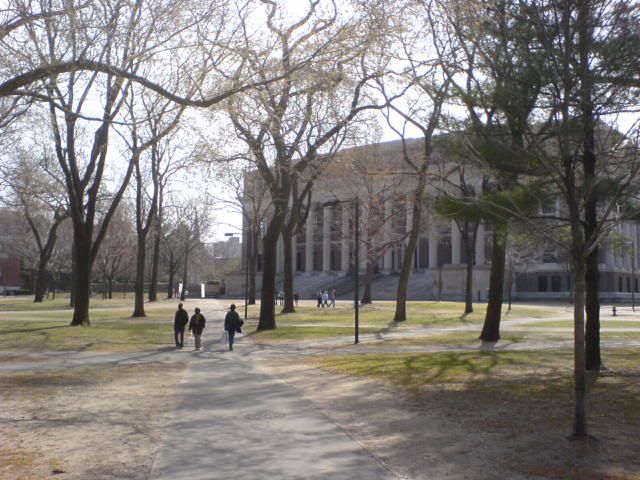
The Widener Library
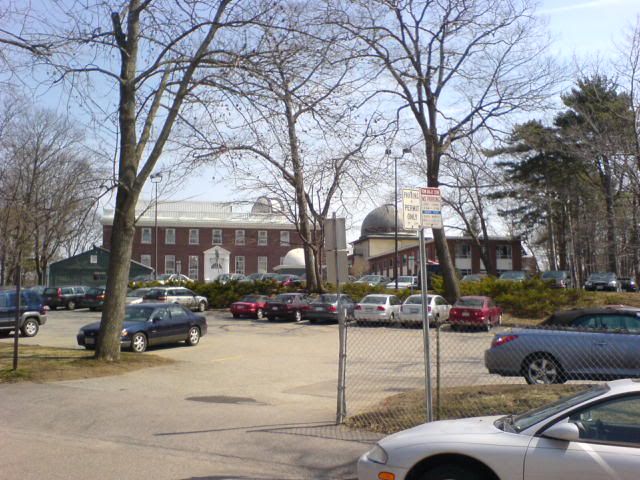
The Harvard-Smithsonian Center for Astrophysics, the largest concentration of PhDs in the world...over 300 under one roof!
Some shots of downtown Boston:
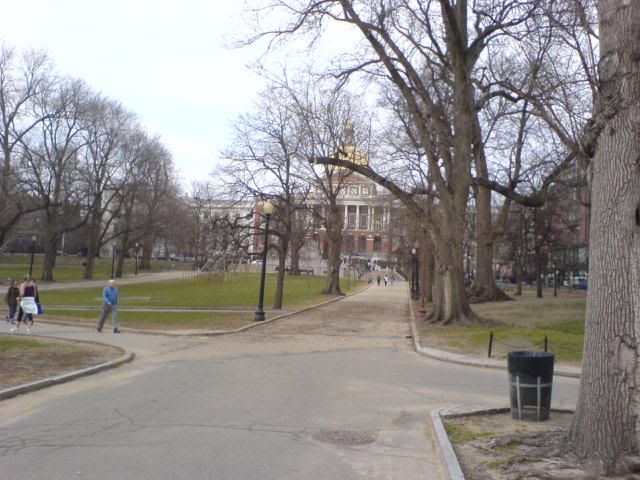
Boston Common, with the Massachusetts State House in the background
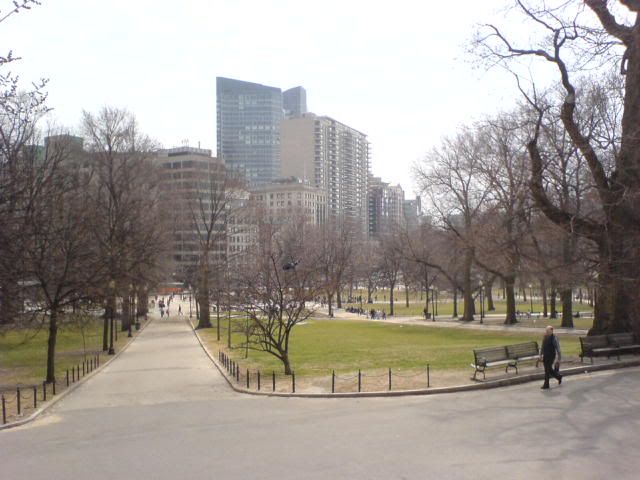
Boston Common, looking towards downtown
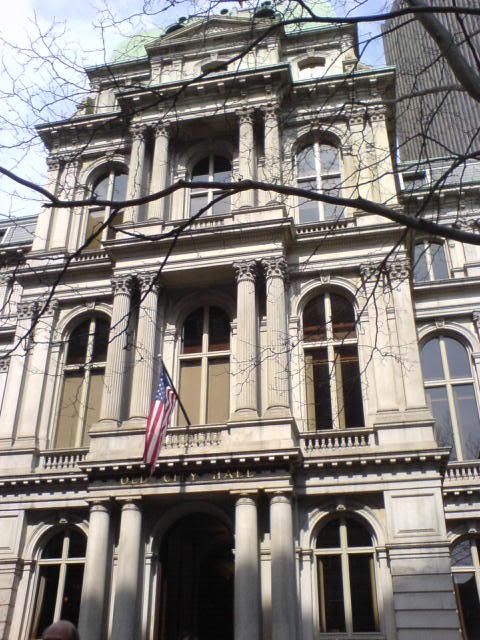
Boston Town Hall (I think)
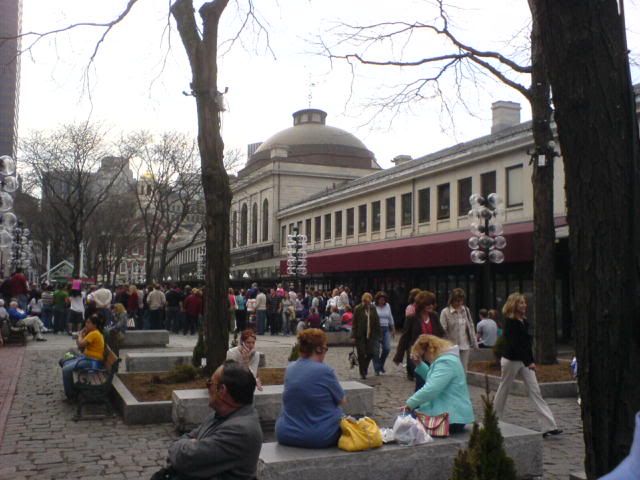
Quincy market, with lots of seafood (yum!)
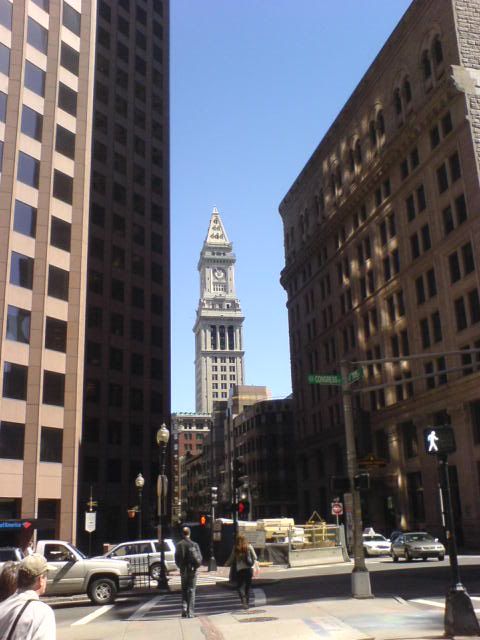
View of downtown
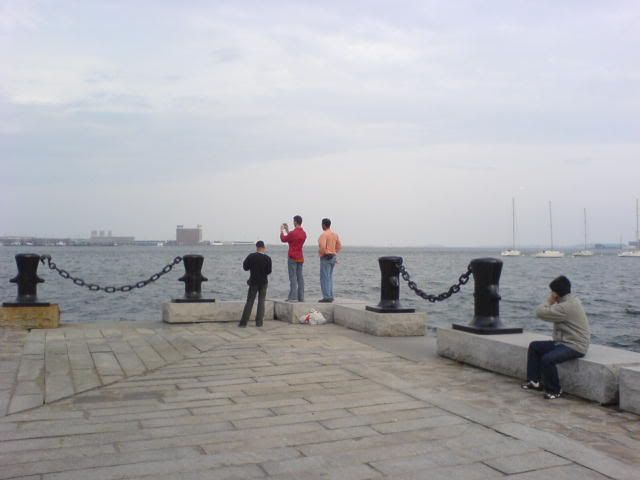
Boston seafront
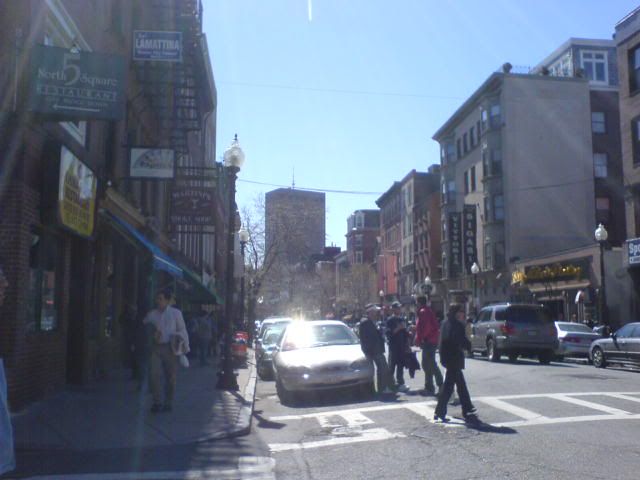
Boston North End, the Italian quarter.
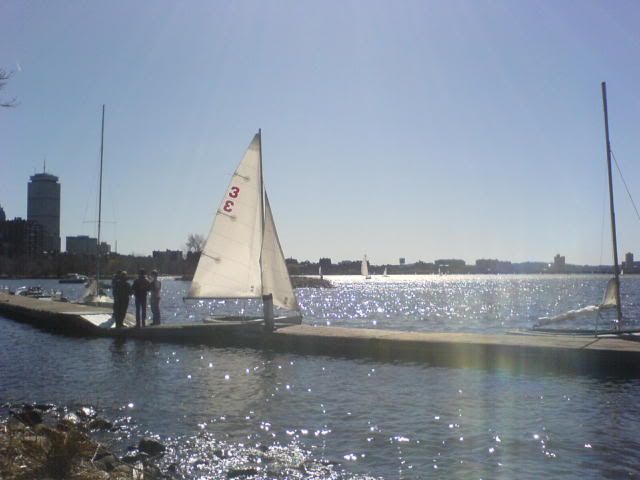
The Charles River and a beautiful day...
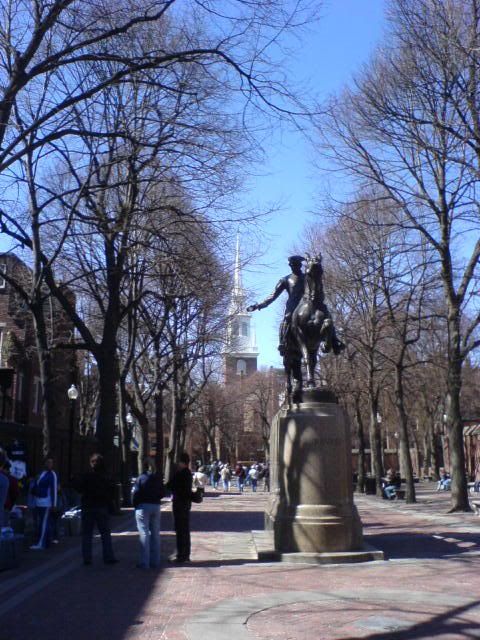
Paul Revere Mall
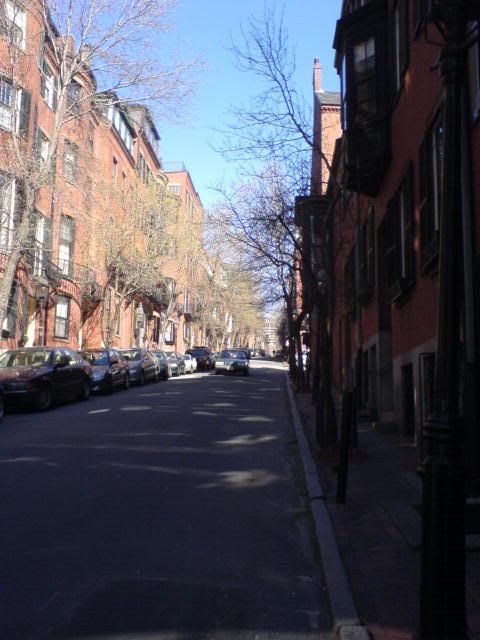
Beacon Hill
The single-carriage 'Dinky' train from Princeton Junction to the Princeton campus:
A couple of shots of 'downtown' Princeton.
The Nassau Hall, oldest building in Princeton (and one-time capital of the US!).
Peyton Hall, the astrophysics department building.
Some random shots of the Princeton campus:
And now Harvard:
Harvard Square:
The entrance to the promised land: gate to the main Harvard campus...
A couple of shots of Harvard Yard
The Widener Library
The Harvard-Smithsonian Center for Astrophysics, the largest concentration of PhDs in the world...over 300 under one roof!
Some shots of downtown Boston:
Boston Common, with the Massachusetts State House in the background
Boston Common, looking towards downtown
Boston Town Hall (I think)
Quincy market, with lots of seafood (yum!)
View of downtown
Boston seafront
Boston North End, the Italian quarter.
The Charles River and a beautiful day...
Paul Revere Mall
Beacon Hill
Thursday, April 06, 2006
Tuesday, April 04, 2006
From Princeton, I took the train to NY Penn Station where I caught a train to Boston (I'm rather proud to state that I spent all of 15 minutes above ground in NYC, to buy a mobile phone charger). The train journey was very nice because we were travelling through the New England countryside around sunset, and the scenery was like something out of a landscape painting.
By the time I got to Boston it was in the night, so I didn't go over to the Center for Astrophysics (CfA) at Harvard until the next morning. Whereas the astrophysics department in Princeton was enclosed in a fairly small building, the CfA in Harvard is huge. It's a 4-storey building holding over 300 PhD researchers (apparently the largest concentration of PhDs in the world!), although a lot of them work for the Smithsonian Observatory which isn't officially part of Harvard.
Just like at Princeton, it was arranged for me to meet up with some of the professors. There were not that many professors at Harvard who were doing cosmology, and I got to talk to 4 of them. The rest of the professors I talked to were in X-ray astrophysics, which I considered rather strange since I specifically stated in my application that I was interested in cosmology for my PhD even though the bulk of my prior research was in X-ray work.
The cosmology profs at Harvard were doing some interesting work, but I felt that they were less enthusiastic about me than Princeton, and some of the current grad students there told me that some of them were difficult to work with. Speaking of the grad students, I managed to speak to quite a few of them, and they were asked to bring me out for lunch and dinner, and to show me around town. They bought me my meals, which the department would later reimburse them for (in fact the department would pay for the students as well, which made them quite happy to come).
Boston is very close to Harvard, less than 10 minutes away by subway. It is a pretty nice and pleasant city, not too big, and I was fortunate enough to come just at the beginning of spring where the weather was nice and sunny. Most of the tourist attractions seem to stem for the historical significance of the city during the Revolutionary Wars, which wasn't as interesting for me as it would be for American visitors, but I did enjoy having decent seafood for my meals.
In the end, however, I decided to choose Princeton. In pure academic reputation, both Harvard and Princeton were probably just about equal, but I preferred the small size of the Princeton department which meant I would be able to know everyone there, whereas I would just get lost in Harvard CfA. Also, in Princeton I would be close to their world-class physics department as well as the Institute of Advanced Studies, Einstein's old stomping ground, which would enrich my education.
Apparently there were 5 students this year who were admission into both Princeton and Harvard, and 4 of them have decided to go to Harvard. I must be say that I found my trip to Harvard/Boston particularly enjoyable, and I enjoyed the company of their students. The Princeton students were nice as well, but I didn't get to hang out with them much apart from one dinner. Indeed, if I was looking for a place where I would have fun and enjoy life, I would probably have chosen Harvard assuming they're equal in academic factors.
A ridiculously important decision in my life, but at least I got to take a look personally before I made my choice. Check back in a few days to see the pics from my trip.
By the time I got to Boston it was in the night, so I didn't go over to the Center for Astrophysics (CfA) at Harvard until the next morning. Whereas the astrophysics department in Princeton was enclosed in a fairly small building, the CfA in Harvard is huge. It's a 4-storey building holding over 300 PhD researchers (apparently the largest concentration of PhDs in the world!), although a lot of them work for the Smithsonian Observatory which isn't officially part of Harvard.
Just like at Princeton, it was arranged for me to meet up with some of the professors. There were not that many professors at Harvard who were doing cosmology, and I got to talk to 4 of them. The rest of the professors I talked to were in X-ray astrophysics, which I considered rather strange since I specifically stated in my application that I was interested in cosmology for my PhD even though the bulk of my prior research was in X-ray work.
The cosmology profs at Harvard were doing some interesting work, but I felt that they were less enthusiastic about me than Princeton, and some of the current grad students there told me that some of them were difficult to work with. Speaking of the grad students, I managed to speak to quite a few of them, and they were asked to bring me out for lunch and dinner, and to show me around town. They bought me my meals, which the department would later reimburse them for (in fact the department would pay for the students as well, which made them quite happy to come).
Boston is very close to Harvard, less than 10 minutes away by subway. It is a pretty nice and pleasant city, not too big, and I was fortunate enough to come just at the beginning of spring where the weather was nice and sunny. Most of the tourist attractions seem to stem for the historical significance of the city during the Revolutionary Wars, which wasn't as interesting for me as it would be for American visitors, but I did enjoy having decent seafood for my meals.
In the end, however, I decided to choose Princeton. In pure academic reputation, both Harvard and Princeton were probably just about equal, but I preferred the small size of the Princeton department which meant I would be able to know everyone there, whereas I would just get lost in Harvard CfA. Also, in Princeton I would be close to their world-class physics department as well as the Institute of Advanced Studies, Einstein's old stomping ground, which would enrich my education.
Apparently there were 5 students this year who were admission into both Princeton and Harvard, and 4 of them have decided to go to Harvard. I must be say that I found my trip to Harvard/Boston particularly enjoyable, and I enjoyed the company of their students. The Princeton students were nice as well, but I didn't get to hang out with them much apart from one dinner. Indeed, if I was looking for a place where I would have fun and enjoy life, I would probably have chosen Harvard assuming they're equal in academic factors.
A ridiculously important decision in my life, but at least I got to take a look personally before I made my choice. Check back in a few days to see the pics from my trip.
Wednesday, March 29, 2006
I've been treated like a prince in Princeton. I'm writing this in my hotel room on my final night here, but it's been a very eventful journey so far.
The flight here was one of the worst I have ever taken. I was flying BA a.k.a. ''Bloody Awful' from Shitrow Terminal 4, and surprise surprise, we took off an hour late. I may have accumulated about 3 round-the-world-trip worth of air-miles over the past few years,but for the 1st time in my life I was treated to an aborted landing. The plane was about 10 feet above the runway at Newark when the pilot hit full throttle and pulled up, so we had to go around for another approach. On terra firma, I was pulled aside at immigration for additional processing, simply because Malaysia is apparently a terrorist nation according to the forever-brilliant US authorities. So when I finally got nto Princeton at 2.30pm, it was about 3 hours later than I had intended.
Princeton itself is a nice, if small, colonial town, and I won't describe it more because pics will be up when I get back to London. When I got into the astrophysics department, Charlotte the student admin offered to go out and get me a sandwich. Embarrassed and shy, I tried to refuse but she insisted. I was taken to meet Jim Stone the graduate admissions chairman, and he told me about their programme. I attended a talk by a professor from UPenn which the rest of the department attended as well, which was interesting because it was about cosmology, my field of interest, although I didn't understand all of it. In the evening, I had dinner with the visiting professor, a Princeton professor and several students.
Most of today was occupied with meeting wth literally half of their faculty (the department here is very small, only about 15 professors). I met them individually for about 30 minutes each, and we discussed both my interests and their research (as it turns out, mostly the latter). Some of these guys literally wrote the book on their respective fields, and I was impressed that they cared enough about getting good students that they spared time for me, even if I may not end up working for them, or indeed not choose Princeton at all.Everyone was nice and friendly, but it was immediately obvious they really are world experts at what they do. A couple of them had interesting characters as well. Robert Lupton is a pony-tailed Englishman who goes around barefoot (yes, barefoot!), and has not lost his dry English sense of humour despite several decades here. Another was Rich Gott, who has intense eyes (as in there is a glint in them) and spent our meeting telling weird stories in addition to giving an impassioned extolation of Princeton's virtues. i later learned from the grad students that he has been known to rant at students for 5 hours nonstop, and likes writing papers on topics like time-travel and aliens.
During the breaks in my schedule, I had the opportunity to mix with the students, and they brought me out for dinner as well. They told me about the student life here as well as telling the not-so-good things here, which shows that they were being frank.They were a nice bunch and I got on well with them.
I'm off to Boston tomorrow to visit Harvard, and it'll be interesting to see how that place contrasts with Princeton.
The flight here was one of the worst I have ever taken. I was flying BA a.k.a. ''Bloody Awful' from Shitrow Terminal 4, and surprise surprise, we took off an hour late. I may have accumulated about 3 round-the-world-trip worth of air-miles over the past few years,but for the 1st time in my life I was treated to an aborted landing. The plane was about 10 feet above the runway at Newark when the pilot hit full throttle and pulled up, so we had to go around for another approach. On terra firma, I was pulled aside at immigration for additional processing, simply because Malaysia is apparently a terrorist nation according to the forever-brilliant US authorities. So when I finally got nto Princeton at 2.30pm, it was about 3 hours later than I had intended.
Princeton itself is a nice, if small, colonial town, and I won't describe it more because pics will be up when I get back to London. When I got into the astrophysics department, Charlotte the student admin offered to go out and get me a sandwich. Embarrassed and shy, I tried to refuse but she insisted. I was taken to meet Jim Stone the graduate admissions chairman, and he told me about their programme. I attended a talk by a professor from UPenn which the rest of the department attended as well, which was interesting because it was about cosmology, my field of interest, although I didn't understand all of it. In the evening, I had dinner with the visiting professor, a Princeton professor and several students.
Most of today was occupied with meeting wth literally half of their faculty (the department here is very small, only about 15 professors). I met them individually for about 30 minutes each, and we discussed both my interests and their research (as it turns out, mostly the latter). Some of these guys literally wrote the book on their respective fields, and I was impressed that they cared enough about getting good students that they spared time for me, even if I may not end up working for them, or indeed not choose Princeton at all.Everyone was nice and friendly, but it was immediately obvious they really are world experts at what they do. A couple of them had interesting characters as well. Robert Lupton is a pony-tailed Englishman who goes around barefoot (yes, barefoot!), and has not lost his dry English sense of humour despite several decades here. Another was Rich Gott, who has intense eyes (as in there is a glint in them) and spent our meeting telling weird stories in addition to giving an impassioned extolation of Princeton's virtues. i later learned from the grad students that he has been known to rant at students for 5 hours nonstop, and likes writing papers on topics like time-travel and aliens.
During the breaks in my schedule, I had the opportunity to mix with the students, and they brought me out for dinner as well. They told me about the student life here as well as telling the not-so-good things here, which shows that they were being frank.They were a nice bunch and I got on well with them.
I'm off to Boston tomorrow to visit Harvard, and it'll be interesting to see how that place contrasts with Princeton.
Monday, March 27, 2006
Yesterday evening, I took out my guitar for Mikhail the Romanian guy to take a look (see previous post). He's been playing since he was 10, but hasn't played for the past 2 years. In fact, he doesn't even keep long nails anymore.
After I played him a couple of pieces (I'm a bit rusty as well as I haven't been practising regularly in some time), I handed him the guitar for him to try. The moment he started playing I could tell that he's a very good guitarist, even if he's really rusty, more so than I am.
He played parts of a couple of pieces (as he forgot them halfway through), then to my surprised he started to play Bach's D minor Chaconne (a properly played version can be heard here), one of the most difficult (both technically and musically) pieces in the classical guitar repertoire. He was playing quite hesitantly and with mistakes, but considering that he hasn't played for a couple of years, it was pretty damn impressive.
Before I continue, I should admit that I'm usually a lousy listener; I have fallen asleep at concerts before, and even when I don't chances are my mind will get distracted and I don't fully appreciate the music. However, with this guy playing the piece in front of me, even if in a rusty way, I found myself following every note and internalising the music. While his playing was imperfect, this was the first time I truly saw the beauty of the Chaconne even though I've heard it many times.
Later in the night, I put on a recording of the Chaconne to try and recapture the beauty again, but it just seemed flat and lifeless.
This just goes to show that music is ultimately a means of communication: I had never spoken to a Romanian before, and yet this stranger could open my eyes to a beauty that I could never perceive before.
I'll be in the US for the rest of this week, so there won't be any new posts till I get back!
After I played him a couple of pieces (I'm a bit rusty as well as I haven't been practising regularly in some time), I handed him the guitar for him to try. The moment he started playing I could tell that he's a very good guitarist, even if he's really rusty, more so than I am.
He played parts of a couple of pieces (as he forgot them halfway through), then to my surprised he started to play Bach's D minor Chaconne (a properly played version can be heard here), one of the most difficult (both technically and musically) pieces in the classical guitar repertoire. He was playing quite hesitantly and with mistakes, but considering that he hasn't played for a couple of years, it was pretty damn impressive.
Before I continue, I should admit that I'm usually a lousy listener; I have fallen asleep at concerts before, and even when I don't chances are my mind will get distracted and I don't fully appreciate the music. However, with this guy playing the piece in front of me, even if in a rusty way, I found myself following every note and internalising the music. While his playing was imperfect, this was the first time I truly saw the beauty of the Chaconne even though I've heard it many times.
Later in the night, I put on a recording of the Chaconne to try and recapture the beauty again, but it just seemed flat and lifeless.
This just goes to show that music is ultimately a means of communication: I had never spoken to a Romanian before, and yet this stranger could open my eyes to a beauty that I could never perceive before.
I'll be in the US for the rest of this week, so there won't be any new posts till I get back!
Sunday, March 26, 2006
I was having lunch in the dining room today, and I sat in front of a new person I've never seen before. We started off a conversation, and I learned that he was Mikhail (sp?) from Romania, and that he was around in London for a job interview.
After a pause in the conversation, he suddenly asked me, 'Are you a guitar player?'. I was surprised and more than a bit discomfitted, and replied in the affirmative. I asked him how he knew, and he said that he noticed my right-hand fingernails were long.
It's kind of like a secret sign for a mysterious brotherhood, that 'brothers' can recognise each other even when they don't know each other.
Fact of the day: there is apparently a Chinatown in Lagos, Nigeria!
After a pause in the conversation, he suddenly asked me, 'Are you a guitar player?'. I was surprised and more than a bit discomfitted, and replied in the affirmative. I asked him how he knew, and he said that he noticed my right-hand fingernails were long.
It's kind of like a secret sign for a mysterious brotherhood, that 'brothers' can recognise each other even when they don't know each other.
Fact of the day: there is apparently a Chinatown in Lagos, Nigeria!
Friday, March 24, 2006
Term is over. I've finished my last term of lectures at UCL.
Today was the last day, and I went into college just to hand in the two copies of my project report. The project itself has been fairly dull and boring, mostly involving writing code and debugging it. My supervisor wasn't around for nearly half of the duration, and he said that getting the project done effectively on my own would boost my self-confidence. It didn't really boost my confidence because it mostly involved things which I knew I was good at, i.e. plain simple getting-things-done and problem-solving skills.
My self-doubts about my mathematical abilities were only exacerbated because most of the background science on the project were beyond my abilities; while I didn't really need to know about those things, the fact that it's there and I can't understand it makes me feel uneasy. I guess it's part of the scientist side of me that feels uncomfortable if there are any stones that have been left unturned.
I was feeling bored and frustrated by project over the past couple of months, and the writing of the report in the last fortnight was just totally uninspired. I just couldn't really be bothered with it anymore, although admittedly there were other distractions which were putting me off it. Last year, I had finished writing the report 3 days in advance of the deadline; this time, I finished writing it 11pm last night, and it was due today.
I'm very glad that project is over and done with. I don't think I'll get great marks for it, so I need to knuckle down and cram for my finals in May. Before I start cramming however, there will be a brief interlude to the US from next Tuesday till Sunday.
Today was the last day, and I went into college just to hand in the two copies of my project report. The project itself has been fairly dull and boring, mostly involving writing code and debugging it. My supervisor wasn't around for nearly half of the duration, and he said that getting the project done effectively on my own would boost my self-confidence. It didn't really boost my confidence because it mostly involved things which I knew I was good at, i.e. plain simple getting-things-done and problem-solving skills.
My self-doubts about my mathematical abilities were only exacerbated because most of the background science on the project were beyond my abilities; while I didn't really need to know about those things, the fact that it's there and I can't understand it makes me feel uneasy. I guess it's part of the scientist side of me that feels uncomfortable if there are any stones that have been left unturned.
I was feeling bored and frustrated by project over the past couple of months, and the writing of the report in the last fortnight was just totally uninspired. I just couldn't really be bothered with it anymore, although admittedly there were other distractions which were putting me off it. Last year, I had finished writing the report 3 days in advance of the deadline; this time, I finished writing it 11pm last night, and it was due today.
I'm very glad that project is over and done with. I don't think I'll get great marks for it, so I need to knuckle down and cram for my finals in May. Before I start cramming however, there will be a brief interlude to the US from next Tuesday till Sunday.
Monday, March 20, 2006
Thursday, March 16, 2006
I gave an after-dinner talk on cosmology to the residents of my hall on Monday. This was actually only the second time I had given a science talk to a 'lay' audience, the first time being some two years ago in '04, when I gave a talk to some students at my old high-school. In fact, the PowerPoint presentation I used on Monday was modified and refined from the high-school talk. I have given many more talks since the one in 2004, and the experience led me to shorten the talk (my rule of thumb is 1.5 minute per slide) and remove all the custom animations (i.e. having to click to bring out individual sentences). I also made some clarifications and corrections to the material based on the extra two years of knowledge I had gained.
The run-up to the talk wasn't ideal.... most of the Circle, Hammersmith and Metropolitan line was down due to signal failure, and I only got back to Netherhall from uni at around 7.15pm when the talk was supposed to be at 7.30. After forcing down my dinner, I went down to the coffee lounge with my laptop only to find that no one had bothered to set up the projector and screen.
After these technical difficulties were resolved, I finally got going. The audience was fairly good, with about 30 people in the room from my rough estimate. I started off with a historical overview of humankind's view of the cosmos, from the early beliefs about a geocentric universe
of the Sun and other bodies orbiting the Earth, through Copernicus, Kepler and Galileo's discoveries which shed light on the actual arrangement of the Solar System.
I then fast-forwarded to the early 20th century to describe the next great change in our understanding of the cosmos: Hubble's discovery that our galaxy was not unique, and his subsequent discovery of the expansion of the universe. This was followed with a brief description of the nature of this expansion, and then about the cosmic microwave background which wrapped up the talk.
When I finished, I got quite a few sensible questions from the audience, which was gratifying because it meant that my talk wasn't totally beyond them.
The presentation itself was a good one, but I felt that my delivery was rather bad. Considering that I used to be a debater for my high-school, I felt that my talk was quite disjointed and inarticulate. Several times I confused myself in trying to explain things without resorting to technical terms, which disrupted the flow. I think that in the future, I need to use cue-cards to ensure that I deliver everything I intend to say, and to keep my mind focused.
After the talk was over, I got some thank-yous and congratulations from my fellow residents. One positive comment was: 'I didn't understand everything you said, but more than I normally would'. It was clear that the subject matter of my talk was fascinating to laypeople, and that the structure of my talk was at least good enough to keep their interest. However, I think that my verbal delivery needs to be polished to give more eloquence and articulation.
When I go back to Malaysia during summer, I will try to arrange a few talks in some schools. I've managed to hold the attentions of a group of grown adults, so we'll see how successful I am in trying to reach out to teenagers.
The run-up to the talk wasn't ideal.... most of the Circle, Hammersmith and Metropolitan line was down due to signal failure, and I only got back to Netherhall from uni at around 7.15pm when the talk was supposed to be at 7.30. After forcing down my dinner, I went down to the coffee lounge with my laptop only to find that no one had bothered to set up the projector and screen.
After these technical difficulties were resolved, I finally got going. The audience was fairly good, with about 30 people in the room from my rough estimate. I started off with a historical overview of humankind's view of the cosmos, from the early beliefs about a geocentric universe
of the Sun and other bodies orbiting the Earth, through Copernicus, Kepler and Galileo's discoveries which shed light on the actual arrangement of the Solar System.
I then fast-forwarded to the early 20th century to describe the next great change in our understanding of the cosmos: Hubble's discovery that our galaxy was not unique, and his subsequent discovery of the expansion of the universe. This was followed with a brief description of the nature of this expansion, and then about the cosmic microwave background which wrapped up the talk.
When I finished, I got quite a few sensible questions from the audience, which was gratifying because it meant that my talk wasn't totally beyond them.
The presentation itself was a good one, but I felt that my delivery was rather bad. Considering that I used to be a debater for my high-school, I felt that my talk was quite disjointed and inarticulate. Several times I confused myself in trying to explain things without resorting to technical terms, which disrupted the flow. I think that in the future, I need to use cue-cards to ensure that I deliver everything I intend to say, and to keep my mind focused.
After the talk was over, I got some thank-yous and congratulations from my fellow residents. One positive comment was: 'I didn't understand everything you said, but more than I normally would'. It was clear that the subject matter of my talk was fascinating to laypeople, and that the structure of my talk was at least good enough to keep their interest. However, I think that my verbal delivery needs to be polished to give more eloquence and articulation.
When I go back to Malaysia during summer, I will try to arrange a few talks in some schools. I've managed to hold the attentions of a group of grown adults, so we'll see how successful I am in trying to reach out to teenagers.
Monday, March 13, 2006
Saturday, March 11, 2006
Last night I decided to join some of my friends to help hand out food to homeless people in Holborn. I'm rather ashamed to say that it must have been a year since I've done any volunteer or charity work, but it's a sad fact that most of the intervening time I've been too busy to even contemplate doing such work, let along go out and do it.
After dinner around 7pm, Jason, Reuven, Alvaro and I went over to Holborn close to LSE. We were originally supposed to first go to Bond St. to help pack the food, but we were a bit late so we were told to go straight to Holborn where it would be distributed. We got there at around half-past, and although the food van wasn't due to arrive until 8pm, there was already a crowd of homeless people milling about. I must say I felt vaguely uncomfortable, as usually one sees homeless people in ones or twos but not a whole crowd of them. It might also be something to do with the fact that homeless people tend not to put personal hygiene very high on the priority list.
In any case, we waited in the chilly evening air until the van arrived. The moment the van arrived, the homeless people started crowding the vehicle as the organisers (not very successfully) tried to get the crowd into a queue. I joined in to hand out the sandwiches and miscellaneous items (which were obviously products about to go off and donated by supermarkets). There was something vaguely resembling a queue by now, but still there were people trying to cut in, and it was disruptive when people requested for specific things ('Do you have a bacon sandwich' etc). The behaviour of the people were rather varied....some of them were polite and thanked us, while others were demanding and brusque. I can understand that their life isn't very peachy, but surely it can't be too difficult to at least try and be a bit more civillised (to be fair, some of them were probably not in full control of their mental faculties).
I particularly felt for a guy in a wheel-chair who could not join in the crush... by the time the crowd had thinned out enough for him to get food, there were only bread-rolls left. Still, he seemed very grateful for what we could give him, which made me wish even more that we had more to give.
After dinner around 7pm, Jason, Reuven, Alvaro and I went over to Holborn close to LSE. We were originally supposed to first go to Bond St. to help pack the food, but we were a bit late so we were told to go straight to Holborn where it would be distributed. We got there at around half-past, and although the food van wasn't due to arrive until 8pm, there was already a crowd of homeless people milling about. I must say I felt vaguely uncomfortable, as usually one sees homeless people in ones or twos but not a whole crowd of them. It might also be something to do with the fact that homeless people tend not to put personal hygiene very high on the priority list.
In any case, we waited in the chilly evening air until the van arrived. The moment the van arrived, the homeless people started crowding the vehicle as the organisers (not very successfully) tried to get the crowd into a queue. I joined in to hand out the sandwiches and miscellaneous items (which were obviously products about to go off and donated by supermarkets). There was something vaguely resembling a queue by now, but still there were people trying to cut in, and it was disruptive when people requested for specific things ('Do you have a bacon sandwich' etc). The behaviour of the people were rather varied....some of them were polite and thanked us, while others were demanding and brusque. I can understand that their life isn't very peachy, but surely it can't be too difficult to at least try and be a bit more civillised (to be fair, some of them were probably not in full control of their mental faculties).
I particularly felt for a guy in a wheel-chair who could not join in the crush... by the time the crowd had thinned out enough for him to get food, there were only bread-rolls left. Still, he seemed very grateful for what we could give him, which made me wish even more that we had more to give.
Thursday, March 09, 2006
I was treated to a show of bureaucratic 'logic' today. I went to apply for a visa for my 5-day trip to the US at the end of this month (which incidentally went quite well, as I only waited a bit more than 2 hours, mostly indoors, compared with 3 1/2 hours shivering outside 2 years ago).
The last time I went to US was for my STScI internship in Baltimore back in '04, and I had all the supporting documentation and forms from STScI to support my visa application. The internship was supposed to be 10 weeks, and the embassy granted me a visa which lasted about 5 months. This time, I am travelling to the US for 5 days, and the embassy officer informed me that he was granting me a visa for the duration of......1 year.
The last time I went to US was for my STScI internship in Baltimore back in '04, and I had all the supporting documentation and forms from STScI to support my visa application. The internship was supposed to be 10 weeks, and the embassy granted me a visa which lasted about 5 months. This time, I am travelling to the US for 5 days, and the embassy officer informed me that he was granting me a visa for the duration of......1 year.
Tuesday, March 07, 2006
I would like to remind all and sundry that my other blog is regularly updated as well, and I'm rather tired of double-posting material from there over here (this blog is only intended for people who know me personally, and I intend on making this dichotomy more clear from now on in my posts). So my opinions on science and physics would go into that blog, while more personal stuff remains here.
Sunday, March 05, 2006
I am not a morning person, period. Back when I was in school, I waking up at 6.30am was a daily struggle. For my parents, on the other hand, it was a natural thing to do. My father wakes up every day at 7am to practise Tai Chi, and my mother wakes up around that time as well. I, on the other had, could rarely get up before noon if there is no particular reason to.
In the middle of night, on the other hand, my brain activity seems to fire up. I enjoy studying in the peace and quiet of the night, with no distractions to bother me. I took this to a rather weird extreme during the Easter break of my first year in uni, when I was studying late at night and waking up rather late in the day as well, with the additional caveat that I started sleeping and waking up later every day. After a couple of weeks, I had reached the point of going to bed at 9am and waking up at 4pm (!). This was rather disorienting, if for no reason other than the fact that I had no idea what meals I should be taking, and eventually I did fall ill from this, I suspect from a combination of this punishing studying regime and the spring flu spreading around.
Nowadays, I have reached a fairly happy compromise of going to bed at about 2am, and waking up before 10 to study. In Netherhall, we are required to vacate our rooms at around 10.15am for cleaning to be done, so I'm forced to get up no matter how lazy I'm feeling.
This few weeks ahead are going to be nasty, however. I have my research project dateline coming up in 3 weeks, and I submit my project report of about 10,000 words by the 24th, and a major headache is that the code I'm working with is still buggy, and the run-time of the code itself is extremely slow. I actually enjoys studying the material I'm learning in my lectures now, however I cannot afford to let my project slip up. I may have no real competitors for top student in my department, but standards have to be maintained...
In the middle of night, on the other hand, my brain activity seems to fire up. I enjoy studying in the peace and quiet of the night, with no distractions to bother me. I took this to a rather weird extreme during the Easter break of my first year in uni, when I was studying late at night and waking up rather late in the day as well, with the additional caveat that I started sleeping and waking up later every day. After a couple of weeks, I had reached the point of going to bed at 9am and waking up at 4pm (!). This was rather disorienting, if for no reason other than the fact that I had no idea what meals I should be taking, and eventually I did fall ill from this, I suspect from a combination of this punishing studying regime and the spring flu spreading around.
Nowadays, I have reached a fairly happy compromise of going to bed at about 2am, and waking up before 10 to study. In Netherhall, we are required to vacate our rooms at around 10.15am for cleaning to be done, so I'm forced to get up no matter how lazy I'm feeling.
This few weeks ahead are going to be nasty, however. I have my research project dateline coming up in 3 weeks, and I submit my project report of about 10,000 words by the 24th, and a major headache is that the code I'm working with is still buggy, and the run-time of the code itself is extremely slow. I actually enjoys studying the material I'm learning in my lectures now, however I cannot afford to let my project slip up. I may have no real competitors for top student in my department, but standards have to be maintained...
Saturday, March 04, 2006
I found this website which shows the descriptions of scientists, by a group of 11 year olds before and after visiting Fermilab, one of the top particle physics facilities in the US. The difference in perception is quite interesting...
I particularly liked this girl's description AFTER visiting the lab:
Before:
After:
I particularly liked this girl's description AFTER visiting the lab:
Before:
You can see them as a mad scientist with hair standing straight up and a mean wicked laugh. . . . I see them with rubber gloves and safety goggles on. I see them in a chemistry lab surrounded by beakers, graduated cylinders and tables filled with experimental materials.
After:
Scientists love their jobs. They wake up in the morning and are excited to come to work. . . . When you are a scientist, you come to work ready to explore and learn new things. Things that may change the world someday. Maybe not today, maybe not tomorrow.
Tuesday, February 28, 2006
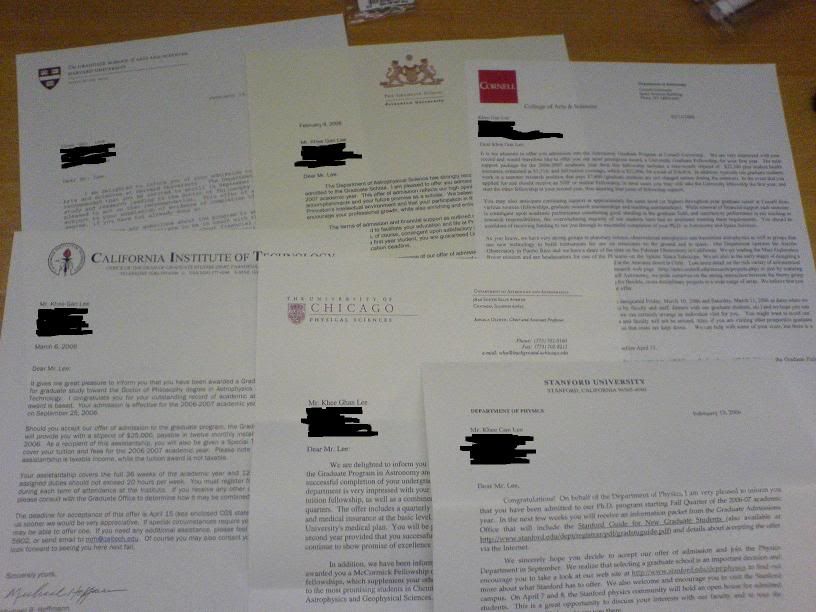
Over the past few weeks, I've been very impressed with the way that American universities try to get their best talent. As of now, I have had 6 PhD offers, and for several times I've had people call me me up to try and convince me to go there. The only universities which haven't called were Chicago and Stanford; with Chicago someone from the faculty did email me personally, and they set a few of their graduate students to email me to answer my queries and convince me. Stanford takes 60 students for their Physics department (which was what I applied to there, instead of astrophysics/astronomy in other places), and it's not surprising that that they can contact such a crowd except for the most exceptional students (and my application wouldn't stand out as far as pure physics is concerned).
Their financial muscle is very obvious as well, from the fact that all of them offered to pay enough travel expenses for me to fly over for a look if I wanted to. I will be flying over to a couple of East Coast universities to take a look, but even the Californian universities are offering for pay for me to go over to visit, which is tempting if not for the fact that it's going to be in the midst of my pre-finals cramming.
Their financial muscle is very obvious as well, from the fact that all of them offered to pay enough travel expenses for me to fly over for a look if I wanted to. I will be flying over to a couple of East Coast universities to take a look, but even the Californian universities are offering for pay for me to go over to visit, which is tempting if not for the fact that it's going to be in the midst of my pre-finals cramming.
Monday, February 27, 2006
I'm not in general a brilliant person. I usually can follow the material in my studies, but often I do have to think about things for some time before I understand it. My strength as scientist, in fact, comes from the fact that I am very good at making connections between things which are on the surface unrelated. Let me illustrate with an example, which happened to me recently.
When I was in first year student halls, there was this guy called Chris with whom I occasionally sat with at dinner. He was a nice and friendly bloke, but I wouldn't really have regarded him as a friend. He was however unusual in studying classics (i.e. Greek and Latin studies, that sort of stuff), and apparently is unbeatable in chess.
In my present halls, over 2 years later, there is this student called Alex from I occasionally say hi to, but don't really talk to since he's very quiet and doesn't talk much, and I've been too busy to really get to know many of the newer residents. However, in a small hall like Netherhall, you learn things about people even if you don't talk to him. I overheard him mentioning to someone that he's from Norwich, and I sometimes saw him playing chess with people in the lounge.
One day, some of synapses just snapped together, and during after-dinner coffee I turned to Alex and asked him, 'Do you by any chance have a brother called Chris?'. He gave me a weird look and slowly said yes. 'Is he by any chance currently doing a Master's in classics in Durham?'. Now he looked slightly alarmed as he said yes again. I then told him that I used to stay in the same halls as his brother in first year. In some part of the brain I must still have remembered that Chris is from Norwich, and I must have made the connection that both their surnames were the same. As I started to look for connections, I noticed that they both had a vaguely similar appearance, and seeing Alex play chess just sealed the case shut.
I'm not sure how much this talent will come into use in my future scientific career, but I suspect that I don't make the grade, I'll just go and become a police detective, I guess....
When I was in first year student halls, there was this guy called Chris with whom I occasionally sat with at dinner. He was a nice and friendly bloke, but I wouldn't really have regarded him as a friend. He was however unusual in studying classics (i.e. Greek and Latin studies, that sort of stuff), and apparently is unbeatable in chess.
In my present halls, over 2 years later, there is this student called Alex from I occasionally say hi to, but don't really talk to since he's very quiet and doesn't talk much, and I've been too busy to really get to know many of the newer residents. However, in a small hall like Netherhall, you learn things about people even if you don't talk to him. I overheard him mentioning to someone that he's from Norwich, and I sometimes saw him playing chess with people in the lounge.
One day, some of synapses just snapped together, and during after-dinner coffee I turned to Alex and asked him, 'Do you by any chance have a brother called Chris?'. He gave me a weird look and slowly said yes. 'Is he by any chance currently doing a Master's in classics in Durham?'. Now he looked slightly alarmed as he said yes again. I then told him that I used to stay in the same halls as his brother in first year. In some part of the brain I must still have remembered that Chris is from Norwich, and I must have made the connection that both their surnames were the same. As I started to look for connections, I noticed that they both had a vaguely similar appearance, and seeing Alex play chess just sealed the case shut.
I'm not sure how much this talent will come into use in my future scientific career, but I suspect that I don't make the grade, I'll just go and become a police detective, I guess....
Tuesday, February 21, 2006
It's not an easy question when people ask me, 'So what is it you're studying in university?'. The official answer is that I'm currently in my final year of an MSci course in Physics with Space Science. The complication starts with the type of degree: people in UK would probably know what an MSci is, but for those who aren't from the UK, the MSci is basically a 4-year science qualification (the engineering equivalent is MEng) designed to try and match European undergraduate degrees, which typically take 5 years and is far more advanced than the British 3-year BSc.
My course is basically 75% physics with the rest being covered by the umbrella description 'space science', which involves space exploration of the solar system and the immediate near-Earth environment. My space science courses embraced both the science as well as the technical engineering and instrumental aspects involved in the subject, so I've learnt quite a bit of spacecraft engineering as well.
I chose this subject because I wanted to go into planetary exploration, but after a year or two in university, my interest turned gradually towards physics and astronomy. Indeed, my summer research experiences since 2nd year have all been in astrophysics, and my term projects in uni have been on astrophysics as well. And so it was that my PhD applications were all in astrophysics.
However, in the past year or so, my interests have yet again made a subtle shift. I've become interested in the early universe, in the era between the Big Bang and the formation of the earliest galaxies. This involves astronomical observations of the cosmic microwave background, but I have been fascinated by the interpretation of the data and the knowledge we can learn about the earliest epochs of the universe. This involves a lot of fundamental physics and mathematics... indeed, this field is the stomping ground of a lot of theoretical physicists. I'm hoping to be able to enter this field, but my undergraduate courses have sacrificed some mathematics and theoretical physics in order to concentrate on engineering and space science, so I have to try and make up for my deficiencies while in graduate school.
There are many exciting fields in physics and astronomy, but I get shivers down my spine whenever I think about the earliest stages of the universe, when it was just cooling down from the violence of the Big Bang, and before the earliest galaxies coagulated from the pristine elements. I hope I have what it takes to be part of the effort to understand this magnificent subject....
My course is basically 75% physics with the rest being covered by the umbrella description 'space science', which involves space exploration of the solar system and the immediate near-Earth environment. My space science courses embraced both the science as well as the technical engineering and instrumental aspects involved in the subject, so I've learnt quite a bit of spacecraft engineering as well.
I chose this subject because I wanted to go into planetary exploration, but after a year or two in university, my interest turned gradually towards physics and astronomy. Indeed, my summer research experiences since 2nd year have all been in astrophysics, and my term projects in uni have been on astrophysics as well. And so it was that my PhD applications were all in astrophysics.
However, in the past year or so, my interests have yet again made a subtle shift. I've become interested in the early universe, in the era between the Big Bang and the formation of the earliest galaxies. This involves astronomical observations of the cosmic microwave background, but I have been fascinated by the interpretation of the data and the knowledge we can learn about the earliest epochs of the universe. This involves a lot of fundamental physics and mathematics... indeed, this field is the stomping ground of a lot of theoretical physicists. I'm hoping to be able to enter this field, but my undergraduate courses have sacrificed some mathematics and theoretical physics in order to concentrate on engineering and space science, so I have to try and make up for my deficiencies while in graduate school.
There are many exciting fields in physics and astronomy, but I get shivers down my spine whenever I think about the earliest stages of the universe, when it was just cooling down from the violence of the Big Bang, and before the earliest galaxies coagulated from the pristine elements. I hope I have what it takes to be part of the effort to understand this magnificent subject....
Subscribe to:
Posts (Atom)